
Arjun ist in Deutschland.
Er ist vor dem Studentendorf. Es ist 13:55 Uhr. Er hat einen Termin mit dem Hausmeister um 14:00 Uhr. Arjun wartet. Er möchte pünktlich sein.
The Bridge: Arjun is in Germany.
He is in front of the student village. It is 1:55 PM. He has an appointment with the caretaker at 2:00 PM. Arjun waits. He wants to be on time.
Natural Repetition:
Ist Arjun in Deutschland? Ja, er ist in Deutschland. Ist es 14:00 Uhr? Nein, es ist 13:55 Uhr.
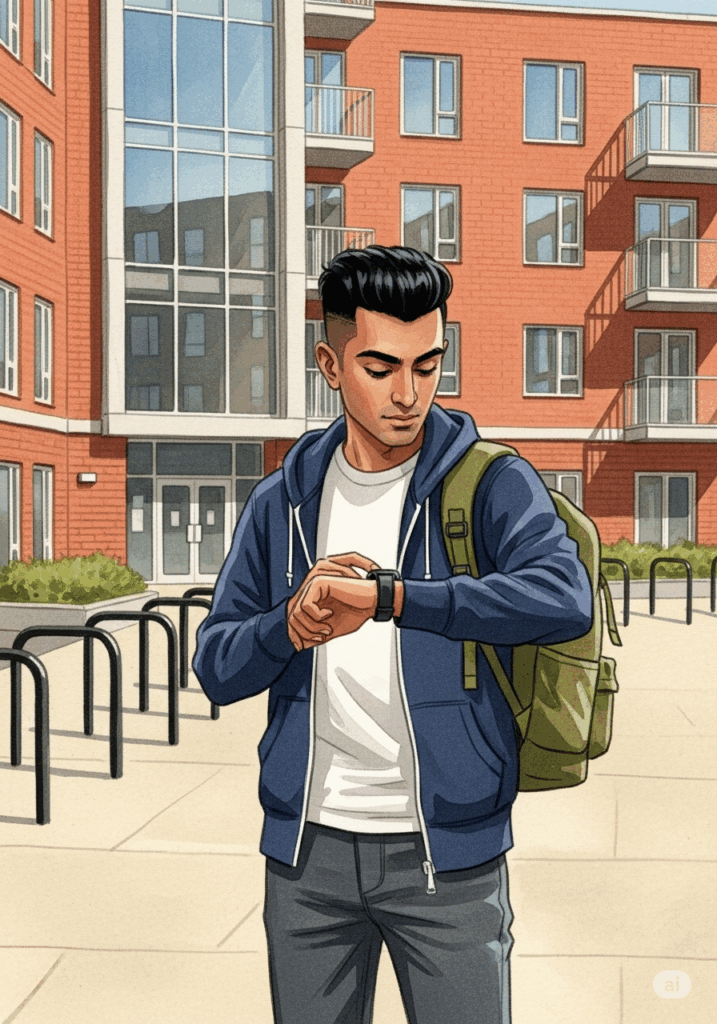
Cultural Insight: In Germany, “pünktlich” (on time) often means arriving five minutes before the scheduled time.
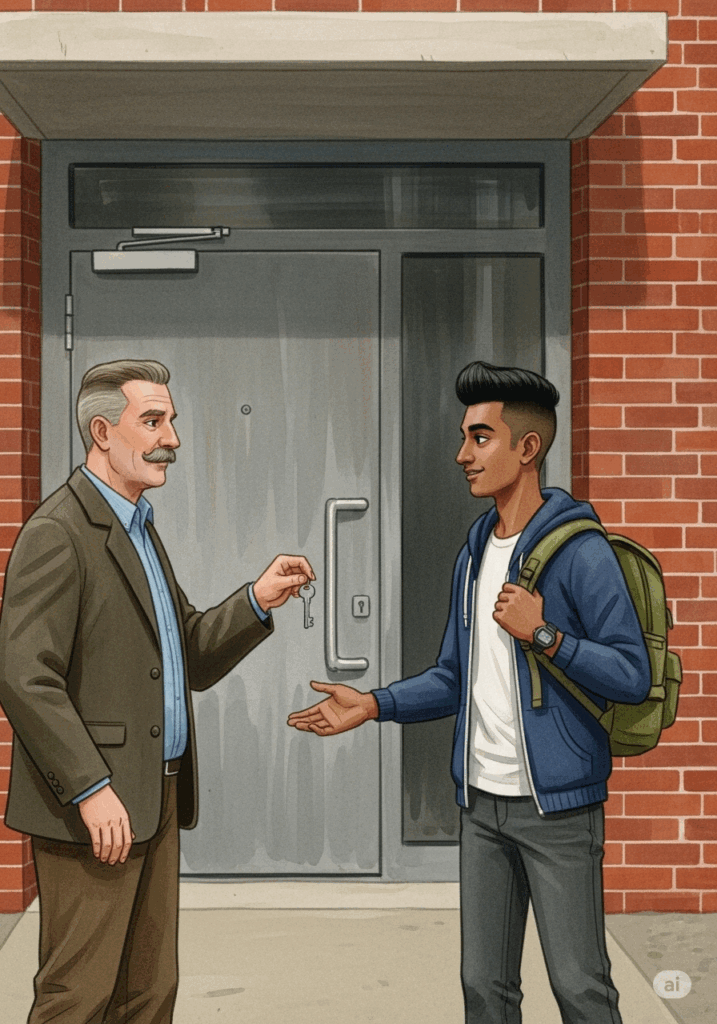
Herr Schmidt ist der Hausmeister. Er kommt genau um 14:00 Uhr. Er sagt: „Guten Tag! Sie sind pünktlich. Das ist sehr gut.“ Herr Schmidt gibt Arjun den Schlüssel für sein Zimmer.
The Bridge: Mr. Schmidt is the caretaker. He arrives exactly at 2:00 PM. He says: “Good day! You are on time. That is very good.” Mr. Schmidt gives Arjun the key for his room.
Natural Repetition: Wer ist Herr Schmidt? Er ist der Hausmeister. Was gibt er Arjun? Er gibt ihm den Schlüssel.
Cultural Insight: The “Hausmeister” is an important figure in German student life; they manage the keys, repairs, and rules of the dormitory.
Arjun hat Hunger.
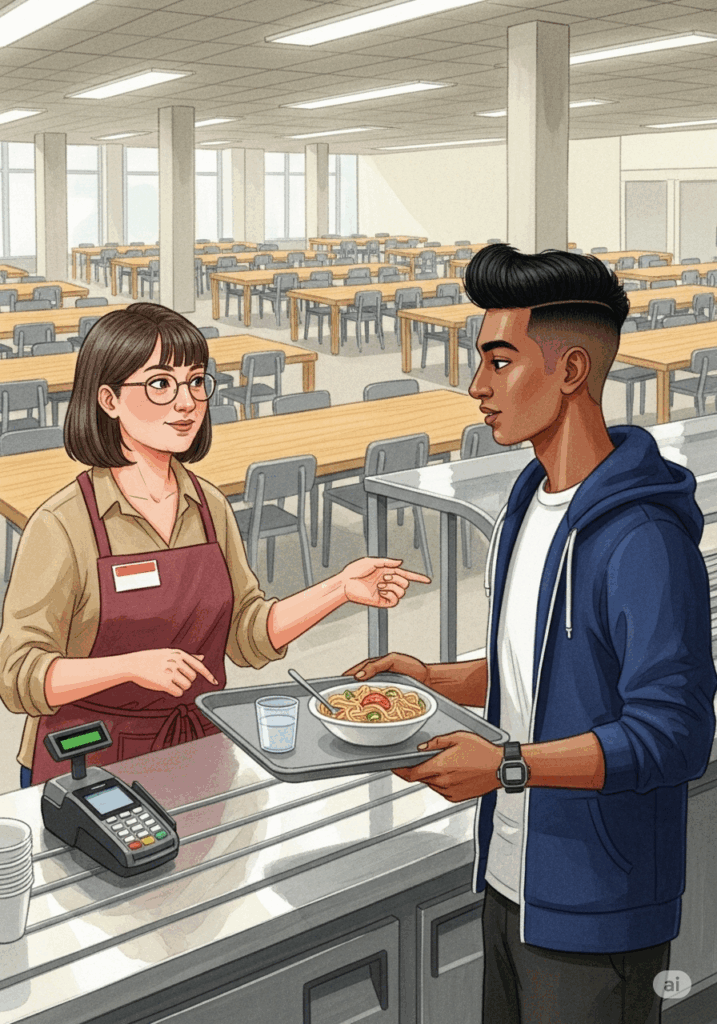
Er geht in die Mensa der Universität. Er sieht das Menü. Heute gibt es Pasta. Er spricht mit Frau Müller an der Kasse. Er braucht seine Studentenkarte.
The Bridge:
Arjun is hungry. He goes to the university canteen. He sees the menu. Today there is pasta. He speaks with Ms. Müller at the register. He needs his student card.
Natural Repetition:
Wohin geht Arjun? Er geht in die Mensa. Hat er Hunger? Ja, er hat Hunger.
Cultural Insight: The “Mensa” is where most students eat. It is affordable, but you usually need a “Studentenkarte” (student ID card) to pay.
Arjun isst die Pasta.
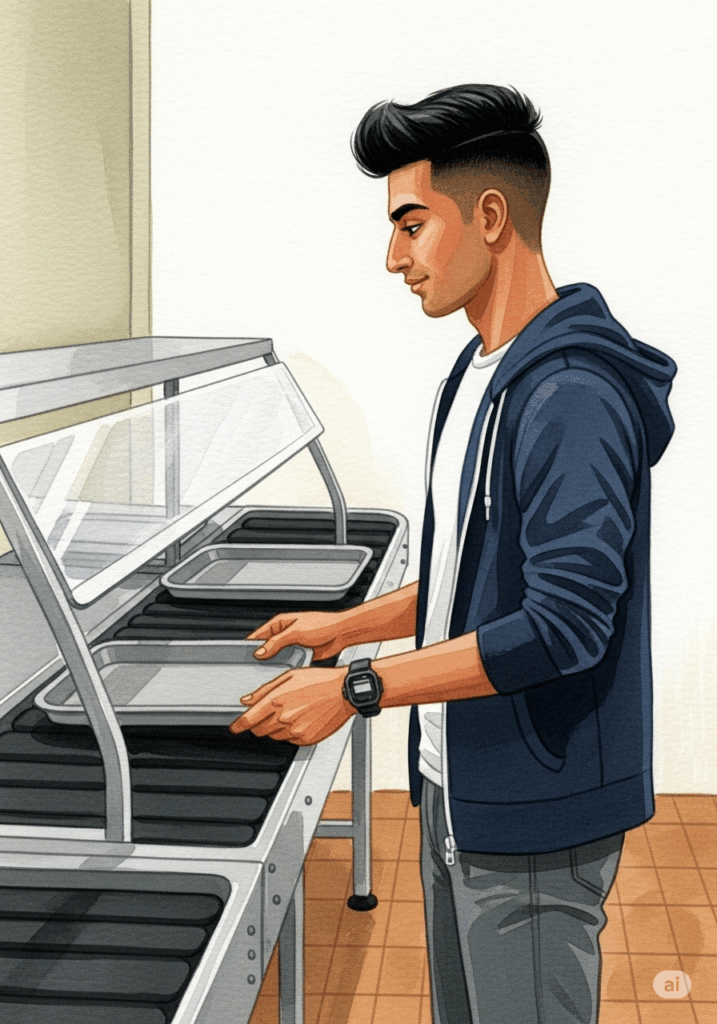
Das Essen ist lecker. Dann steht er auf. Er bringt das Tablett zur Tablett-Rückgabe. Er lässt seinen Platz sauber. Das ist wichtig in der Mensa.
The Bridge:
Arjun eats the pasta. The food is delicious. Then he stands up. He takes the tray to the tray return station. He leaves his place clean. That is important in the Mensa.
Natural Repetition:
Ist das Essen lecker? Ja, es ist lecker. Wohin bringt Arjun das Tablett? Er bringt es zur Tablett-Rückgabe.
Cultural Insight:
Clearing your own table and returning your tray (“Tablett-Rückgabe”) is a standard expectation in German canteens.

Arjun hat seine erste Vorlesung.
Der Hörsaal ist groß. Professor Klein spricht über Informatik. Die Vorlesung endet. Professor Klein sagt: „Vielen Dank für heute.“
The Bridge:
Arjun has his first lecture. The lecture hall is large. Professor Klein talks about computer science. The lecture ends. Professor Klein says: “Thank you very much for today.”
Natural Repetition:
Wo ist Arjun? Er ist im Hörsaal. Wer spricht? Professor Klein spricht.
Cultural Insight:
University lectures are formal environments. Professors are highly respected and usually addressed by their titles.

Die Studenten klatschen nicht.
Sie benutzen ihre Fäuste. Sie klopfen laut auf die Tische: Klopf! Klopf! Klopf! Arjun schaut seine Freundin Lena an. Er klopft auch auf den Tisch.
The Bridge:
The students do not clap. They use their fists. They knock loudly on the tables: Knock! Knock! Knock! Arjun looks at his friend Lena. He knocks on the table too.
Natural Repetition:
Klatschen die Studenten? Nein, sie klatschen nicht. Klopft Arjun auf den Tisch? Ja, er klopft.
Cultural Insight:
“Akademisches Klopfen” (academic knocking) is the traditional way for German students to show appreciation at the end of a lecture.

Arjun geht zum Supermarkt.
Er hat leere Plastikflaschen in einer Tasche. Er sucht den Pfandautomaten. Er stellt die Flaschen in die Maschine. Die Maschine macht Geräusche.
The Bridge:
Arjun goes to the supermarket. He has empty plastic bottles in a bag. He looks for the bottle return machine. He puts the bottles into the machine. The machine makes noises.
Natural Repetition:
Was hat Arjun? Er hat leere Flaschen. Wohin geht er? Er geht zum Supermarkt.
Cultural Insight:
Germany has a robust recycling system. Most plastic and glass bottles carry a deposit called “Pfand.”
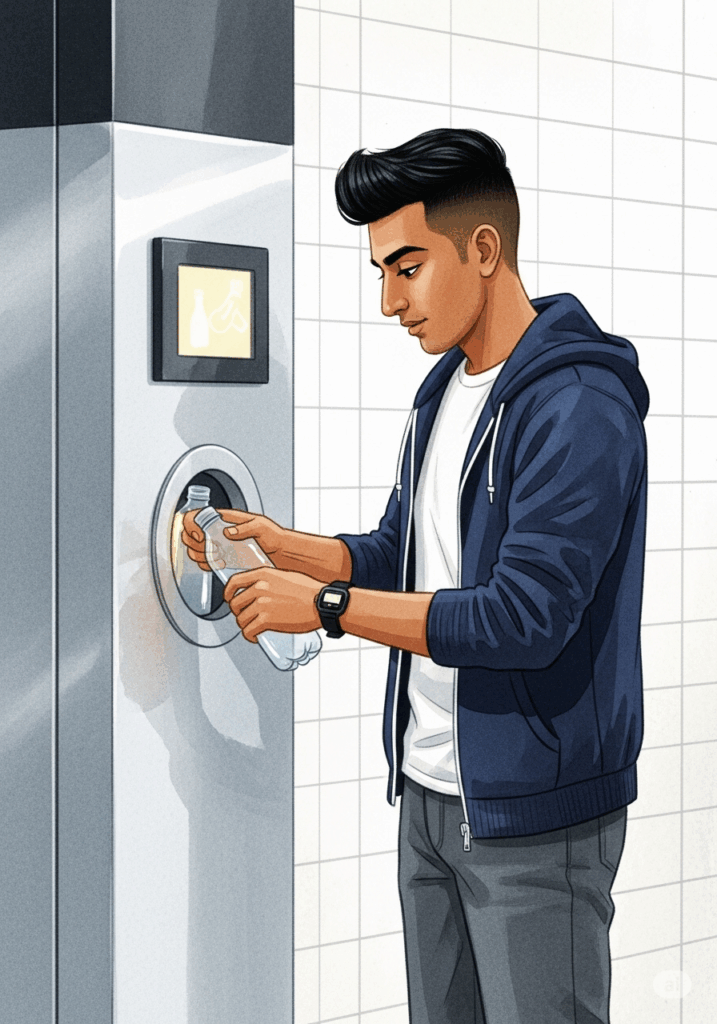
Die Maschine ist fertig.
Arjun drückt einen Knopf. Er bekommt einen kleinen Zettel. Das ist der Pfandbon. Er bekommt 25 Cent für jede Flasche. Er geht zur Kasse.
The Bridge:
The machine is finished. Arjun presses a button. He gets a small piece of paper. That is the deposit voucher. He gets 25 cents for each bottle. He goes to the register.
Natural Repetition:
Was bekommt Arjun? Er bekommt einen Pfandbon. Wie viel Geld ist das? Es sind 25 Cent pro Flasche.
Cultural Insight:
“Mülltrennung” (waste separation) is taken very seriously. Returning bottles is part of a sustainable lifestyle in Germany.

Arjun trifft Lena vor der Bibliothek.
Er möchte mit ihr lernen. Er fragt: „Lena, hast du Zeit?“ Lena schaut auf ihr Handy. Sie sagt: „Ja, am Dienstag um 16:00 Uhr.“
The Bridge:
Arjun meets Lena in front of the library. He wants to study with her. He asks: “Lena, do you have time?” Lena looks at her phone. She says: “Yes, on Tuesday at 4:00 PM.”
Natural Repetition:
Wen trifft Arjun? Er trifft Lena. Wann hat sie Zeit? Am Dienstag um 16:00 Uhr.
Cultural Insight:
Even for friends, making a “Termin” (appointment) is very common in Germany. People plan their weeks in advance.
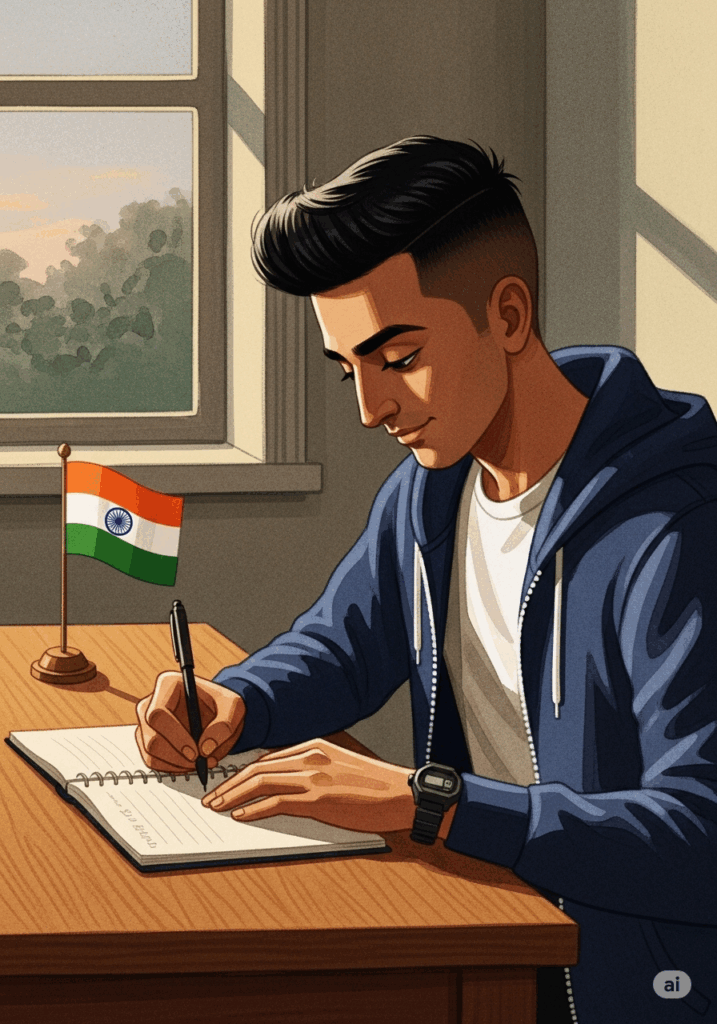
Arjun macht einen Plan.
Er schreibt den Termin in seinen Kalender. Er sagt: „Dienstag, 16:00 Uhr. Ich werde pünktlich sein.“ Arjun fühlt sich gut. Seine erste Woche war erfolgreich.
The Bridge:
Arjun makes a plan. He writes the appointment in his calendar. He says: “Tuesday, 4:00 PM. I will be on time.” Arjun feels good. His first week was successful.
Natural Repetition:
Was macht Arjun? Er macht einen Plan. Schreibt er den Termin auf? Ja, er schreibt ihn auf.
Cultural Insight:
Respecting a “Termin” shows that you respect the other person’s time. Planning helps reduce stress in a new culture.
